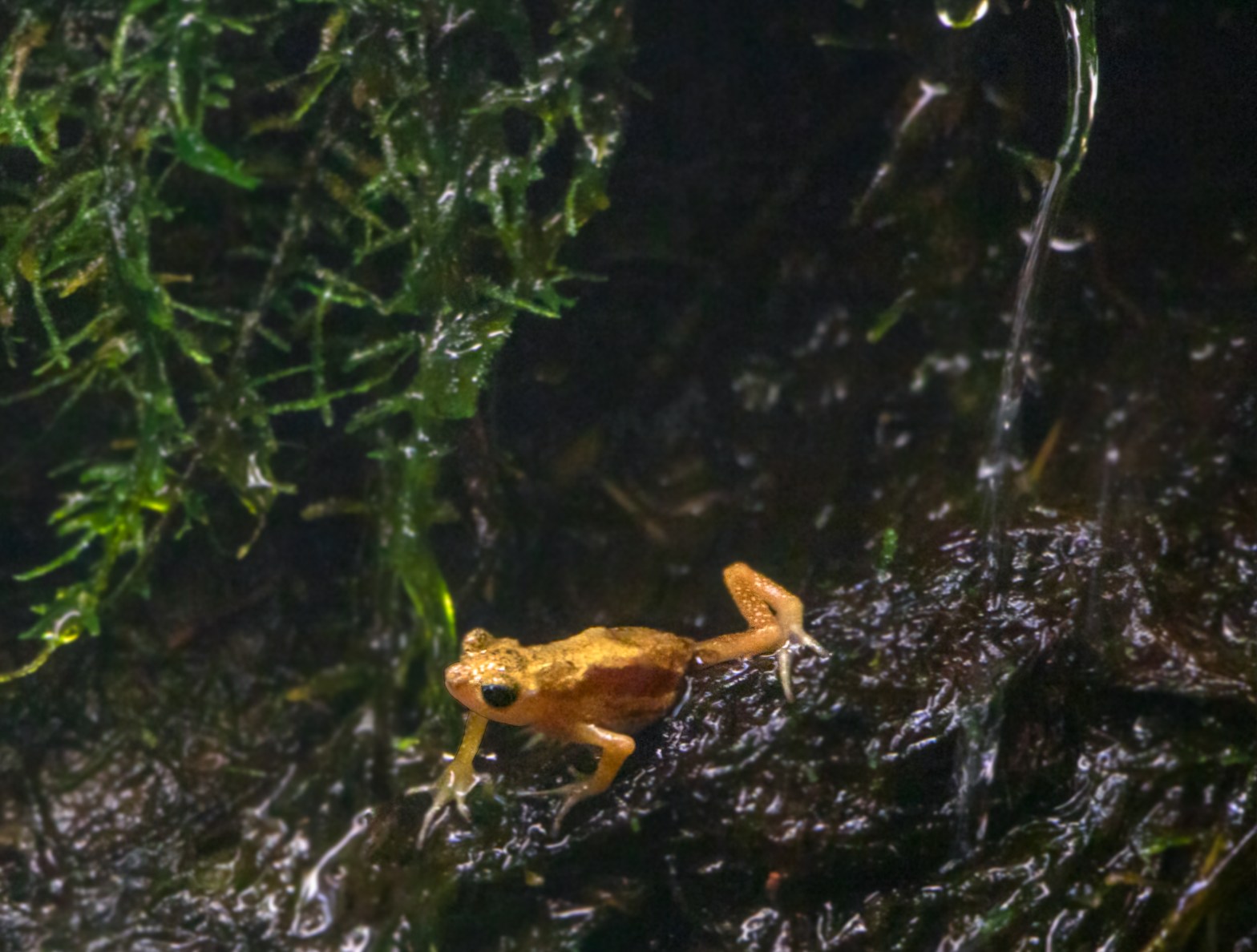
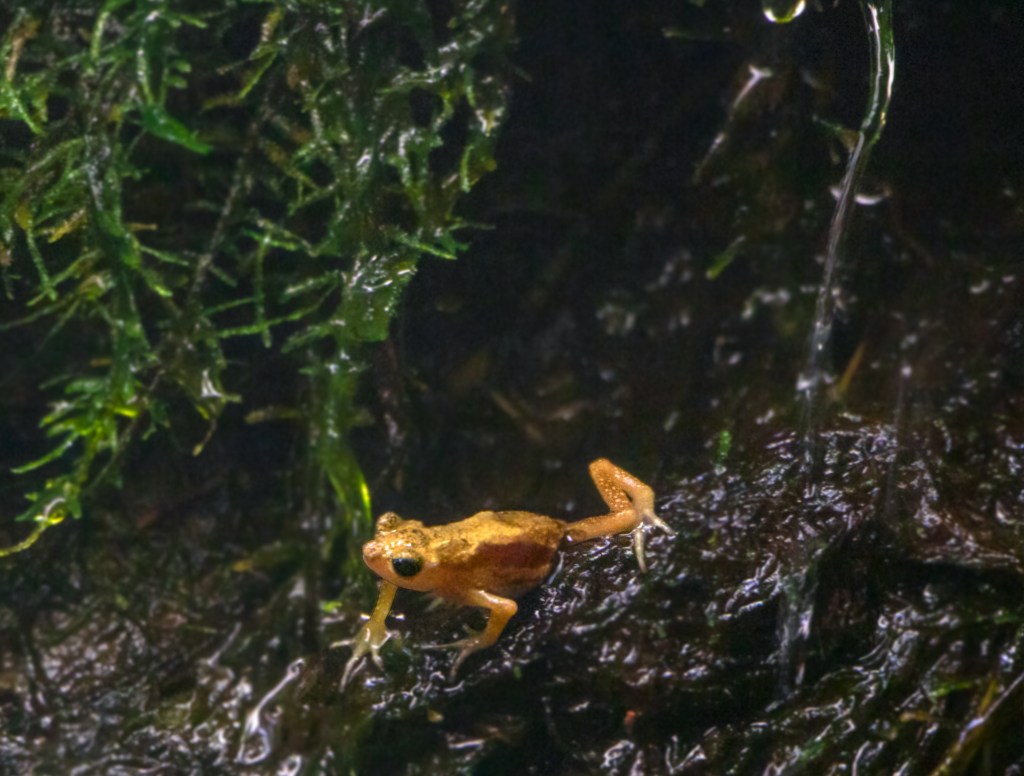
The Kihansi Spray Toad is the first extinct in the wild amphibian to be reintroduced to its natural habitat, the Kihansi Falls in the Udzungwa Mountains in Tanzania, Africa.
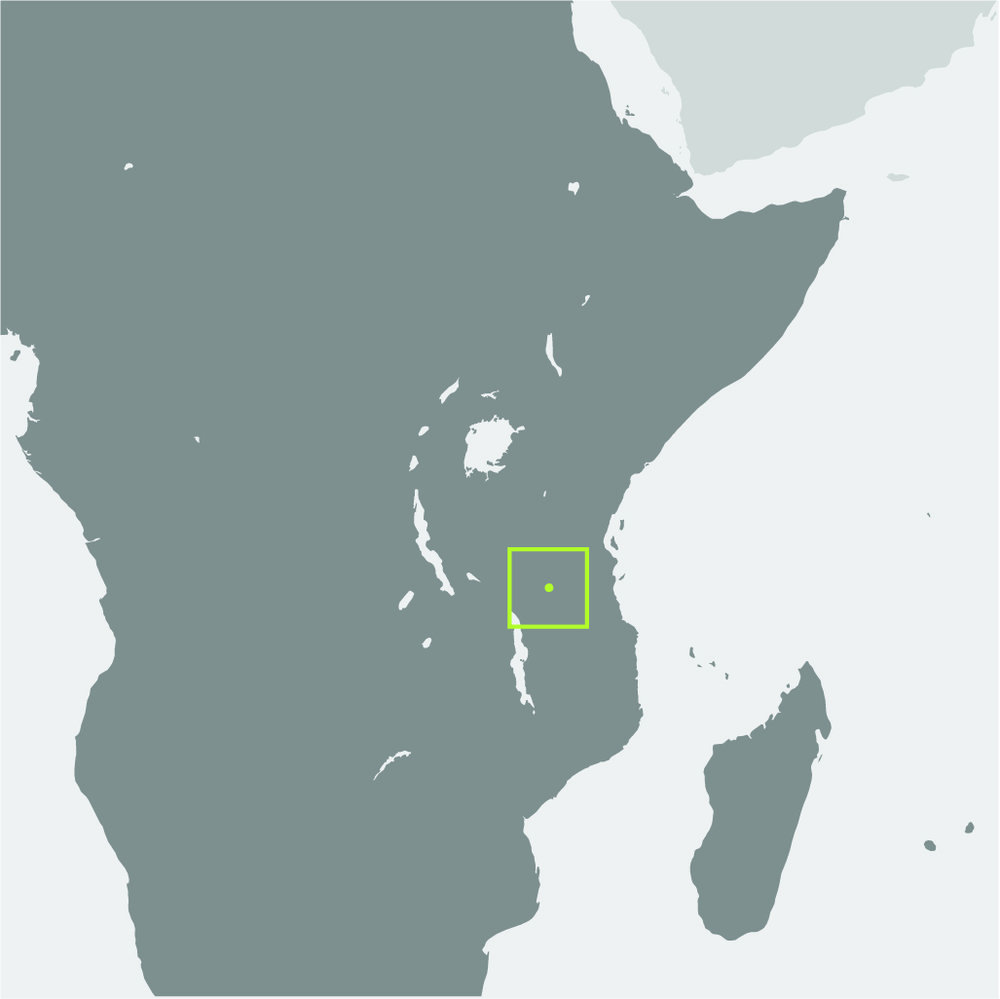
This toad lives only in the spray zone of the falls, where there is plenty of mist. In 2000 the water flow was diverted to power a hydroelectric dam. As a result, the area dried out.
Unable to live without the misty environment the species quickly declined. In 2009 the IUCN declared the Kihansi spray toad extinct in the wild.
Luckily scientists predicted the population collapse and collected around 500 toads to create a captive assurance population. Several zoos in the U.S. began breeding programs, as well as facilities in Tanzania, with the goal of reintroducing the toads back into the wild.
The World Bank funded the installation of a gravity-fed misting system at the Kihansi Falls to recreate the toad’s environment. In 2010 the first group of toads was reintroduced. In 2012 about 2,000 toads were successfully reintroduced by a team from around the world with representatives from the Toledo Zoo, World Conservation Society, The World Bank, the IUCN, Tanzania Wildlife Research Institute, the University of Dar Es Salaam, Sokoine University of Agriculture, local Tanzanian villagers.
This project demonstrates the important role that zoos play in wildlife conservation. It also demonstrates the collaboration between multiple countries and groups. A truly global effort.
 Eye of the Wild Photography